Mapping of Surveillance and Integrated Health Information Systems (Phase 1 – 3)
Executive Summary
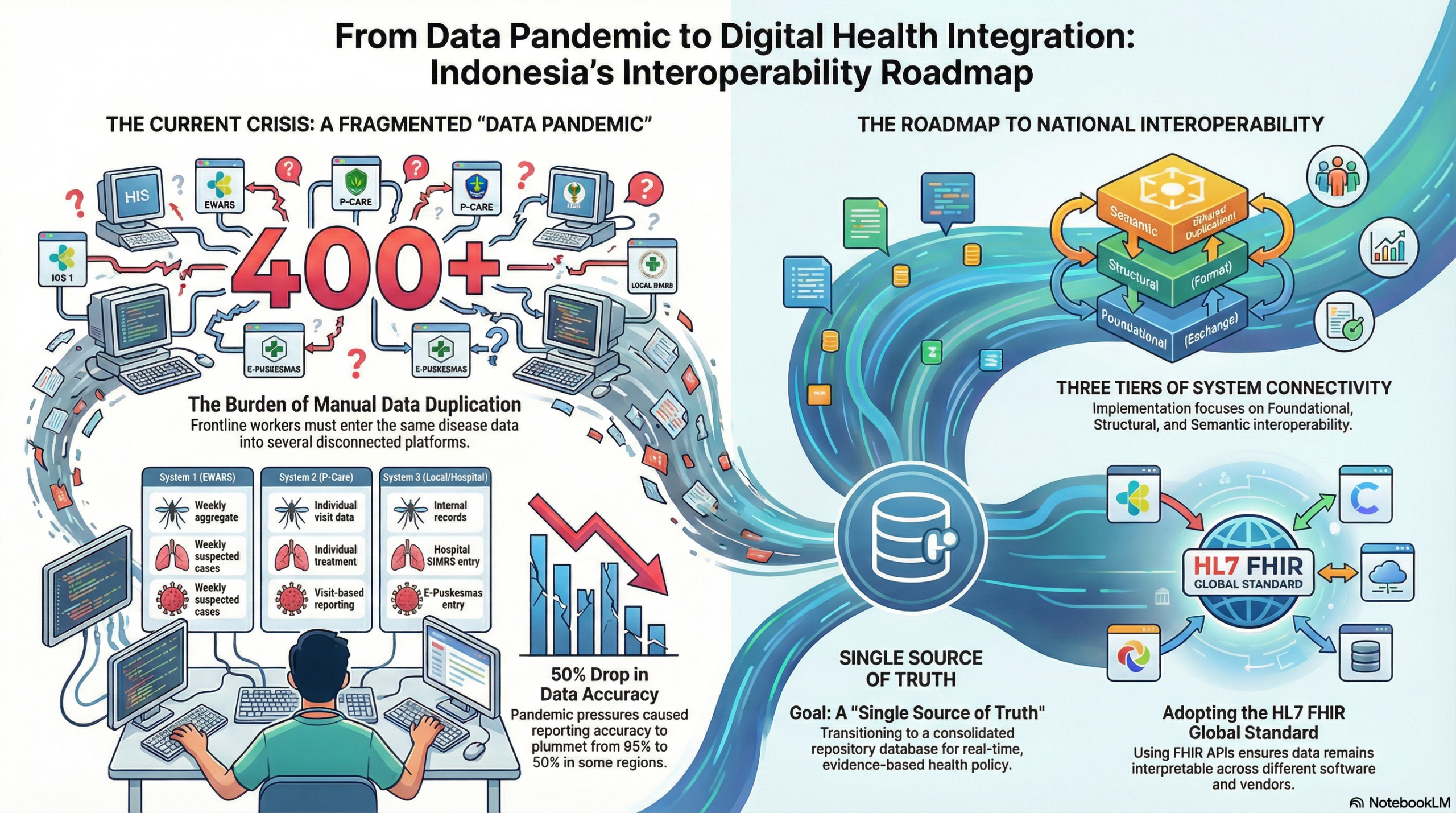
A strong health system depends on reliable and timely data. To support Indonesia’s commitment to health security, this project was designed to address Indonesia’s fragmented Health Information System (HIS), which currently comprises hundreds of overlapping applications that create an immense workload for frontline health workers and hinder timely, evidence-based decision-making. Reconstra served as the key implementing partner, conducting this comprehensive mapping and design project for the Australia Indonesia Health Security Partnership (AIHSP).
Implemented over seven months, the initiative followed three strategic phases to ensure a practical and sustainable transformation.
The project began with a comprehensive assessment of existing health information and surveillance systems, including EWARS. Through policy reviews and consultations with stakeholders at national and subnational levels, we identified critical gaps in human resource capacity, reporting efficiency, ICT skills, and infrastructure readiness. In several areas, unstable internet connectivity and outdated hardware affected timely reporting. The findings reinforced the importance of improving data quality to ensure information is consistent, accurate, complete, and integrated.
Building on the assessment, the second phase focused on developing interoperability standards that enable secure data exchange across institutions and sectors. By promoting the adoption of international standards such as FHIR, the project supports structured and secure data sharing through APIs. This approach allows health facilities, laboratories, and government institutions to exchange information efficiently, improving coordination and evidence-based decision-making.
The final phase translated technical recommendations into concrete business requirements and system architecture. Key components include Master Data Management, a centralized repository database, and an interoperability engine to ensure secure and standardized data flows.
Together, these efforts lay the foundation for a scalable and future-ready health information ecosystem—strengthening surveillance, accelerating outbreak response, and ultimately improving health outcomes for communities across Indonesia.